
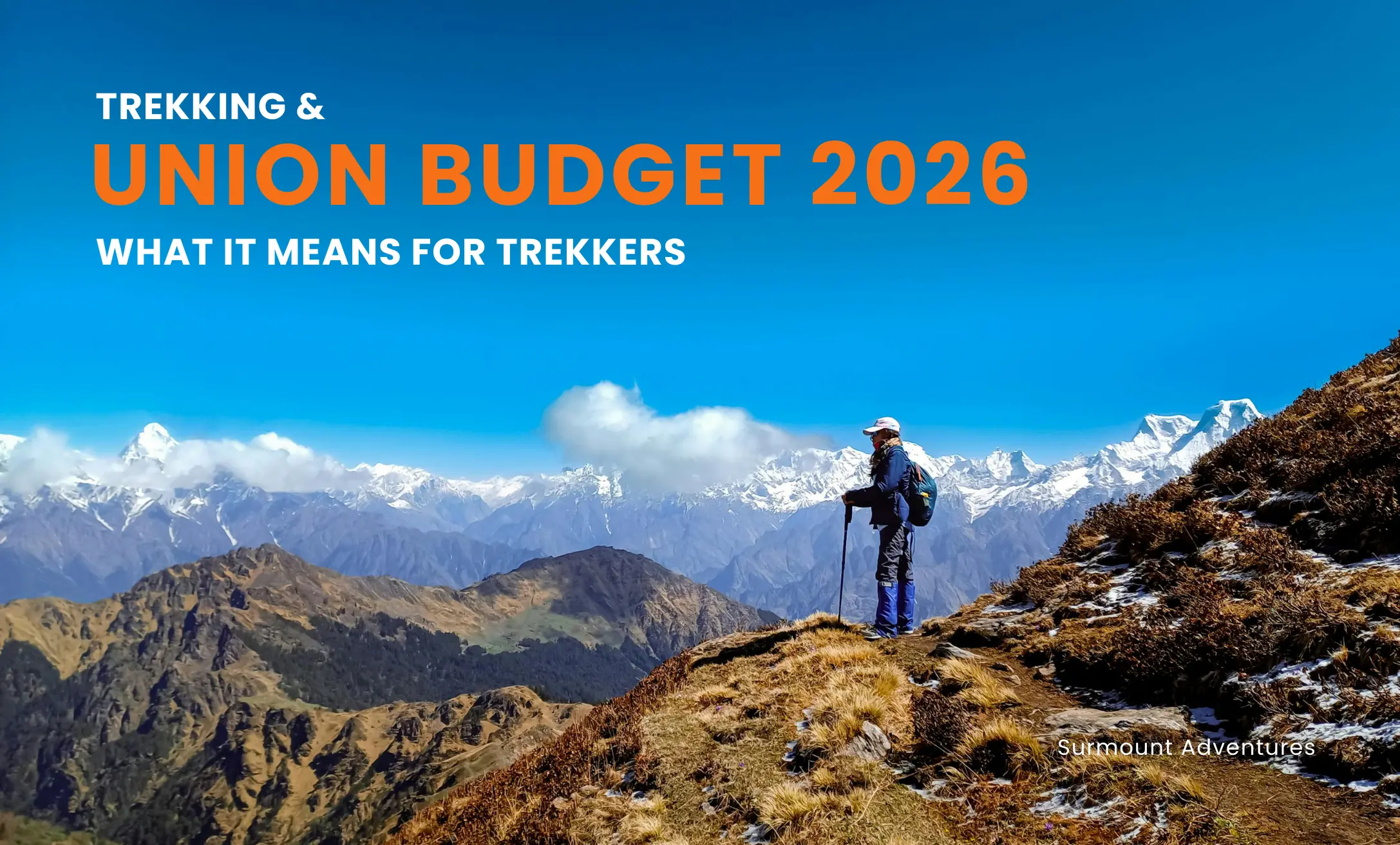
For the first time, trekking has entered India’s mainstream policy conversation through the Union Budget 2026–27. The government’s announcement to develop ecologically sustainable mountain trails across Uttarakhand, Himachal Pradesh, Jammu & Kashmir, the Eastern and Western Ghats, and select coastal regions marks a defining shift in India’s tourism vision.
This is not just a mention. It is a milestone.
For decades, India has been promoted globally as a destination of heritage, spirituality, and culture. With this Budget, the narrative expands. Trekking and hiking are now recognized as structured, growth-driven sectors capable of positioning India as a serious adventure tourism destination.
But beyond policy language and announcements, the real question is:
What does this mean for trekkers?
1. Better Managed & Regulated Trails
India has incredible trekking routes, but many suffer from overcrowding, inconsistent management, or lack of regulation. The focus on sustainable trail development signals a move toward organized governance rather than unchecked tourism.
For trekkers, this means:
• Safer and better-marked trails
• Reduced congestion on popular routes
• Improved waste management systems
• Better preservation of fragile ecosystems
A regulated system enhances both experience and environmental protection.
2. Access to New & Lesser-Known Destinations
One of the most promising aspects of the announcement is expansion beyond the usual trekking hotspots. Development in the Himalayas, Ghats, and even coastal ecosystems means India’s adventure map is set to widen.
For trekkers, this means:
• Exploring pristine and less crowded regions
• Discovering new multi-day trekking circuits
• Experiencing diverse terrains — from alpine valleys to forested hills
Distributing trekking activity across more regions reduces pressure on overused trails while enriching the trekking experience.
3. A Stronger Push Toward Sustainability
The phrase “ecologically sustainable mountain trails” is crucial. As concerns around over-tourism grow, sustainability must lead development.
For trekkers, this translates into:
• Cleaner campsites
• Responsible group sizes
• Regulated footfall
• Long-term preservation of mountain landscapes
Well-managed trekking ensures that today’s adventures do not compromise tomorrow’s mountains.
4. Growth of Multi-Day Trekking Culture
India’s real strength lies in immersive, multi-day trekking experiences — journeys that take trekkers deep into remote valleys and high-altitude landscapes.
As infrastructure improves and governance strengthens, multi-day treks will become more accessible and professionally managed.
For trekkers, this means:
• Structured itineraries
• Better camping logistics
• Professional trek leadership
• Improved emergency preparedness
Multi-day treks offer depth, connection, and transformation — something single-day hikes rarely provide.
5. Higher Safety & Professional Standards
With trekking gaining national-level recognition, expectations around safety, permits, and operational standards will likely increase.
For trekkers, this means:
• More organized expeditions
• Better-trained trek leaders
• Stronger safety protocols
• Enhanced trust in operators
Professionalization builds confidence in the trekking ecosystem.
A Strategic Shift in India’s Tourism Vision
This Budget signals something larger than trail development. It reflects a strategic repositioning of India — from primarily a cultural destination to a balanced destination that includes adventure tourism at its core.
The long-term impact could include:
• Improved mountain infrastructure
• Stronger collaboration between governments and private operators
• Employment generation in remote regions
• Increased global visibility for Indian trekking circuits
When structured properly, trekking not only protects landscapes but also uplifts mountain communities.
What This Means for Surmount Adventures Trekkers
At Surmount Adventures, we see this moment as both validation and responsibility.
For our trekking community, this means:
• Thoughtfully curated new trekking routes
• Continued commitment to eco-conscious trekking
• Strict safety and operational standards
• Responsible group sizes to prevent overcrowding
• Stronger partnerships with local communities
As India enters a new era of organized adventure tourism, our philosophy remains clear:
Quality over crowd. Sustainability over speed. Experience over numbers.
A New Chapter for Indian Trekkers
The inclusion of trekking in the Union Budget 2026 is more than policy recognition — it is acknowledgment that trekking is a meaningful and growing part of India’s tourism future.
For trekkers, this signals:
• Safer mountains
• Cleaner trails
• Wider exploration opportunities
• Stronger systems behind every journey
The mountains are evolving. And so is the ecosystem that supports those who walk them.
If implemented with care, regulation, and responsibility, this could mark the beginning of a stronger, more sustainable future for trekking in India — one that benefits trekkers, communities, and the mountains alike.
