Devkund Waterfall Trek
2D/1N
Bhira, Maharashtra
Moderate
2,700 FT
↬ Overview
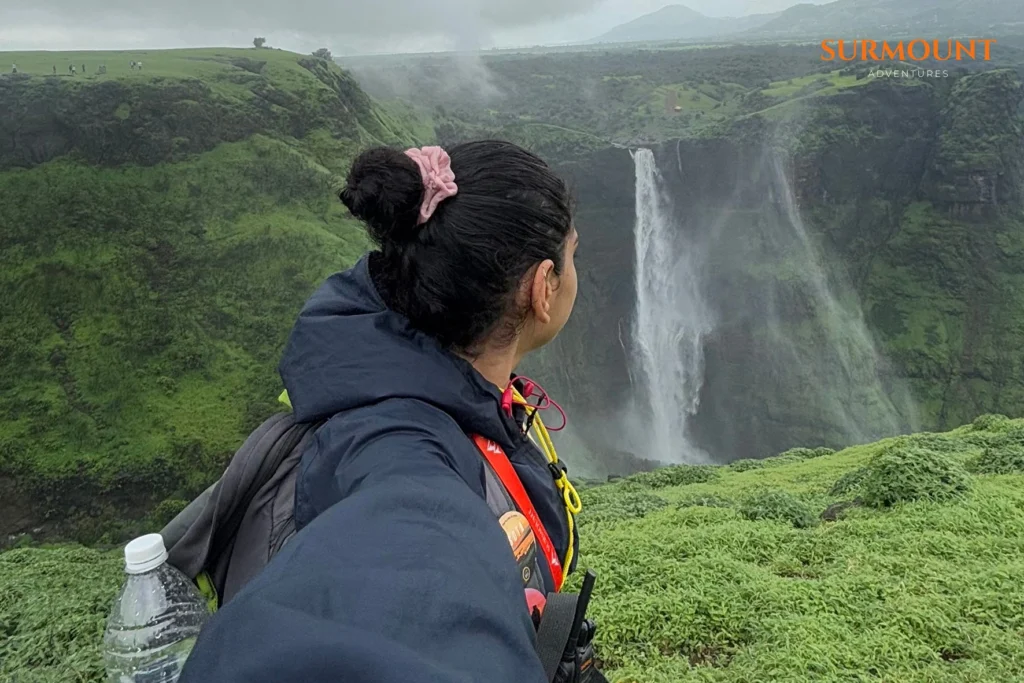
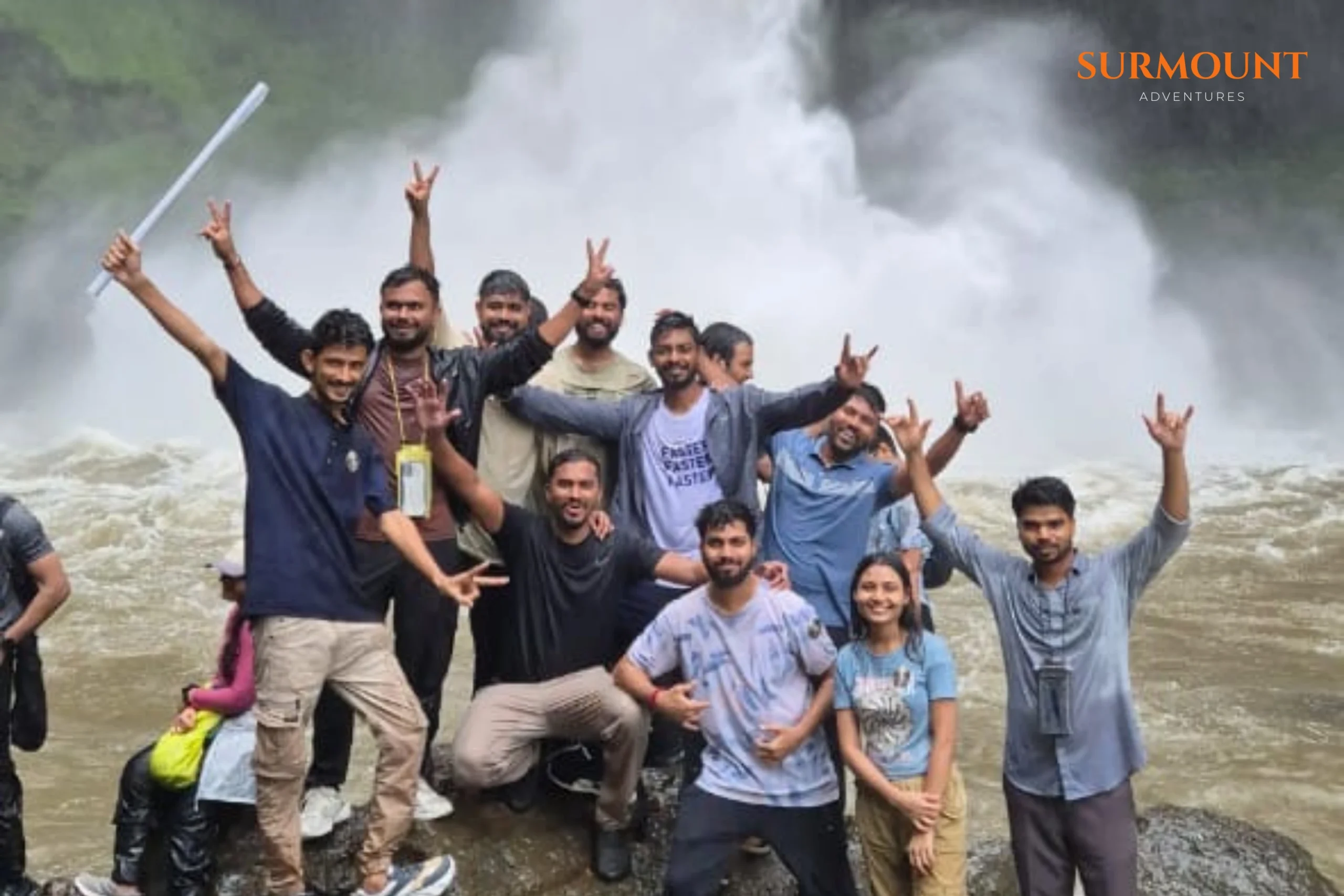
The Devkund Waterfall Trek is one of the most popular waterfall treks in Maharashtra, known for its dense forest trails, river crossings, and a spectacular plunge waterfall hidden deep inside the Sahyadri range. Located near Bhimashankar Wildlife Sanctuary in Raigad district, Devkund is recognized as the origin of the Kundalika River, which later flows toward Bhira Dam. Due to its scenic beauty, manageable difficulty level, and proximity to Pune and Mumbai, the trek has become a favorite among monsoon trekkers and weekend explorers.
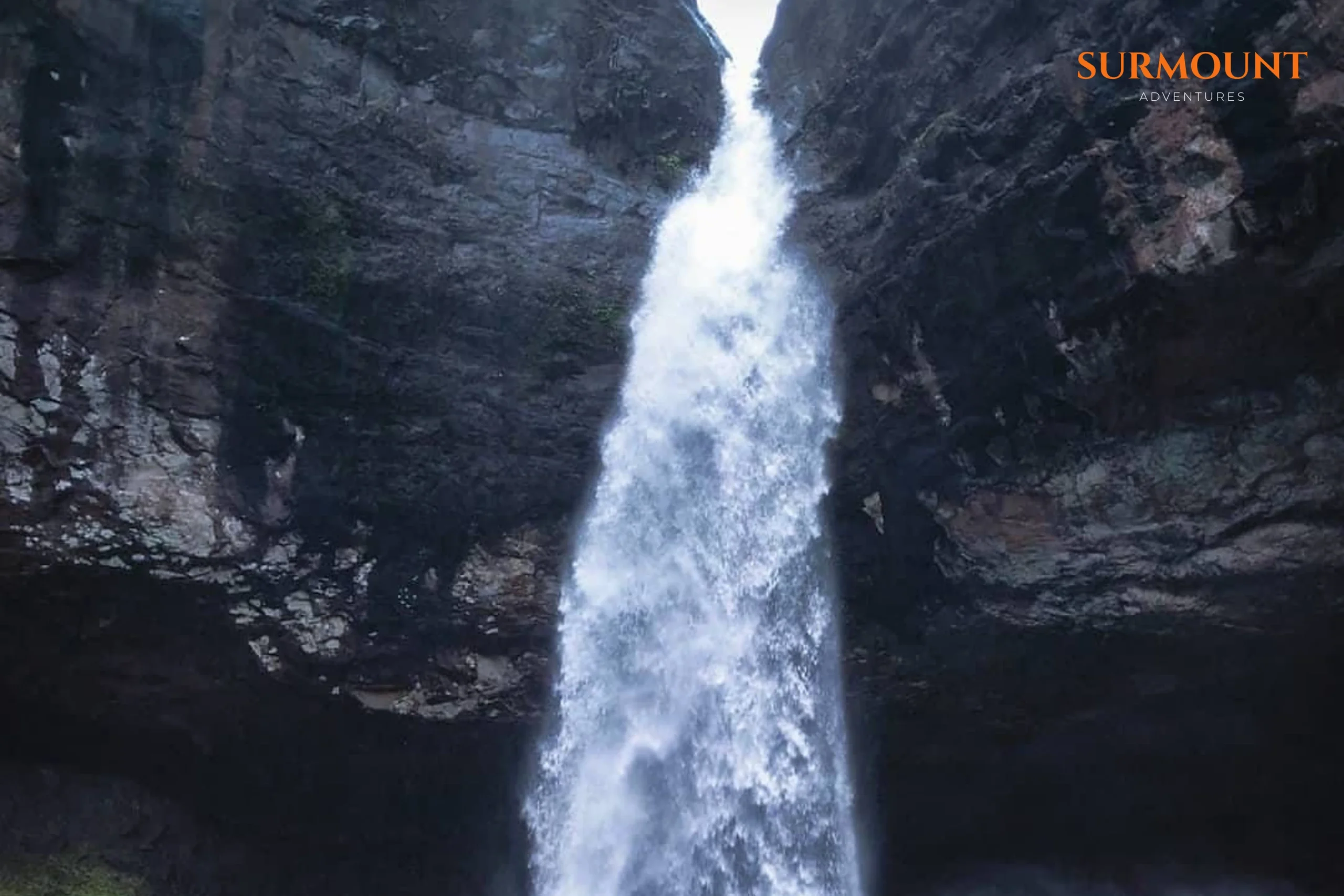
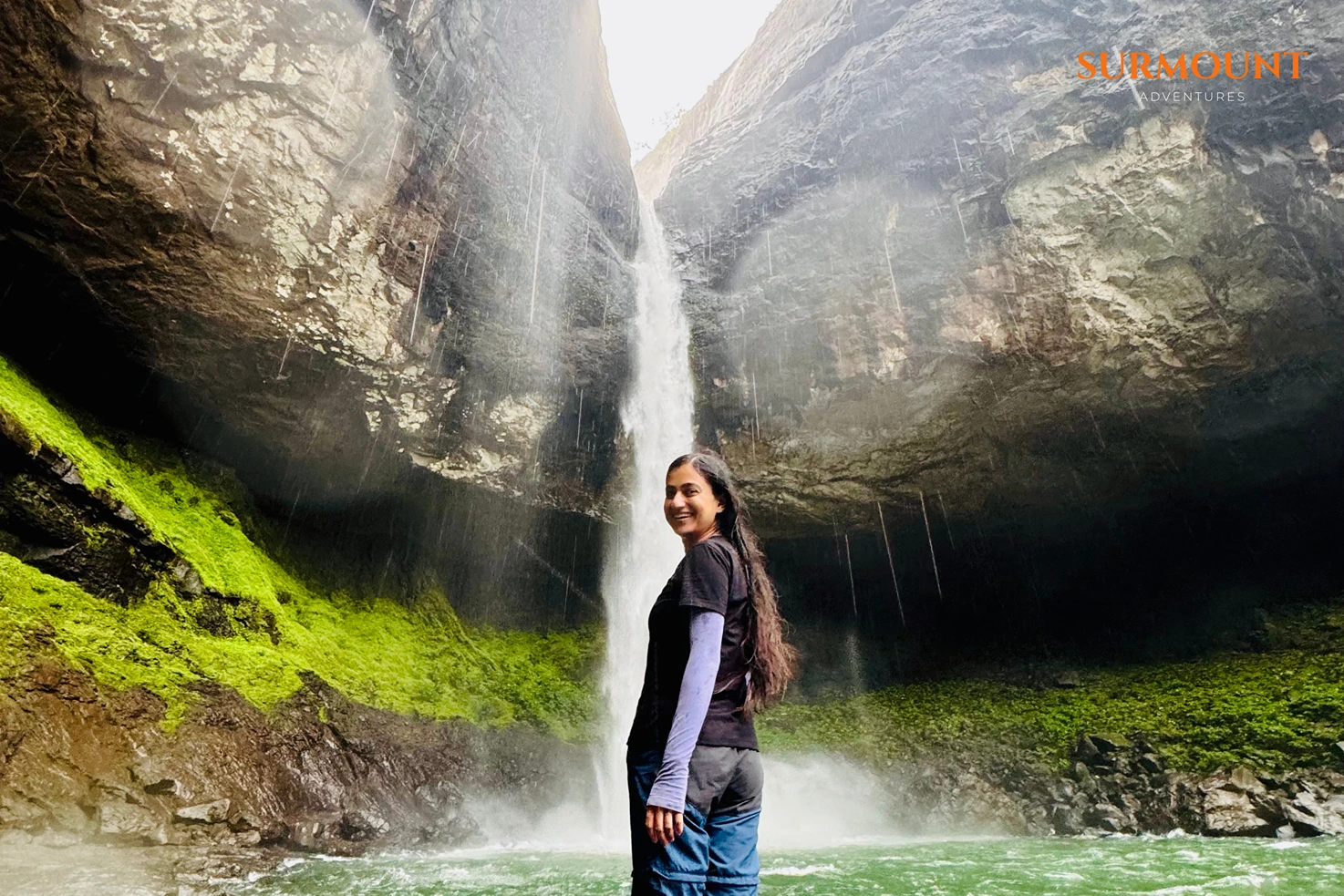
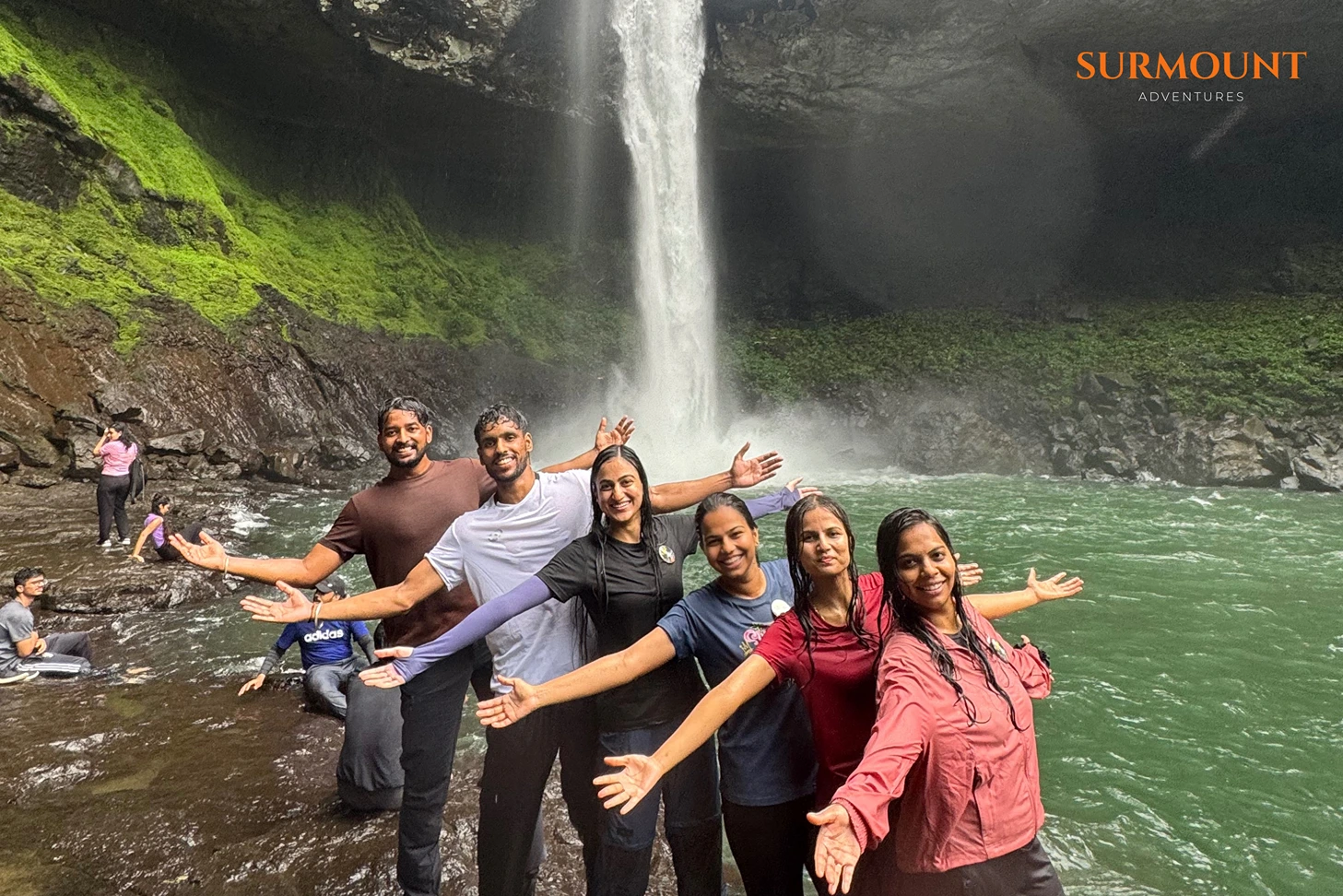
Unlike easily accessible roadside waterfalls, Devkund requires a guided trek through protected forest land, making the journey more immersive and rewarding. The trail passes through thick jungle paths, rocky riverbeds, and shaded forest sections before opening up to the dramatic sight of water plunging vertically into a natural pool surrounded by steep cliffs. This hidden setting is what makes Devkund stand out among monsoon treks in Maharashtra.
Location and Natural Setting
Devkund Waterfall is located near Bhira village, on the outskirts of the BhimashankarWildlife Sanctuary, part of the Western Ghats UNESCO World Heritage region. The surrounding forest is rich in biodiversity and remains lush throughout the monsoon and post-monsoon seasons. Devkund is a plunge waterfall, where water drops vertically into a deep basin, creating a powerful and visually striking formation, especially during peak monsoon.
Why Devkund Waterfall Trek Is Popular
The Devkund Waterfall Trek offers an ideal balance of adventure and accessibility. It is not a technical or high-altitude trek, making it suitable for beginners with basic fitness, while still offering enough challenge through uneven terrain and river crossings. Its location makes it a perfect one-day trek from Pune and Mumbai, requiring minimal planning while delivering a complete nature experience.
Trek Route and Trail Experience
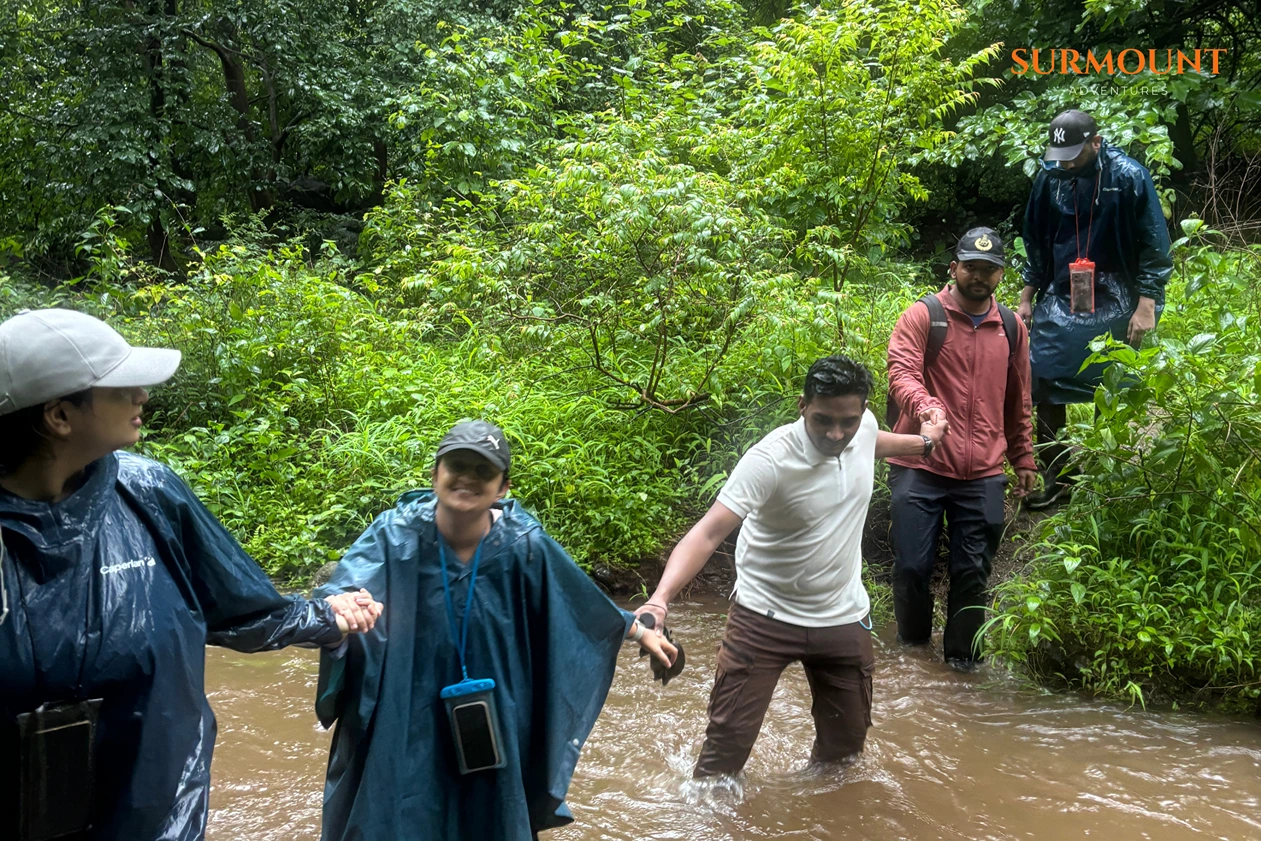
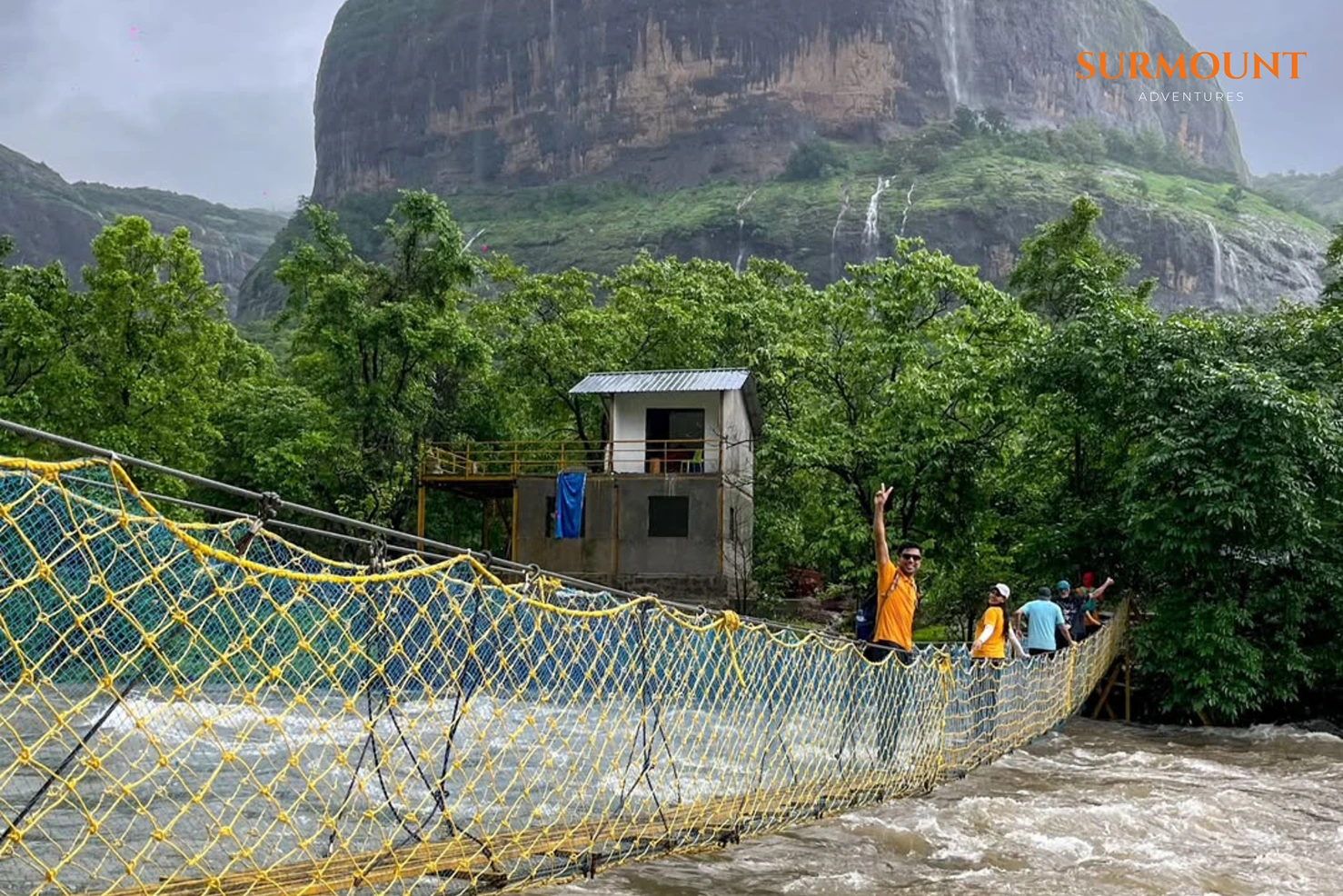
The trek usually starts from Bhira or Patnus base village, depending on forest permissions. From the base, trekkers enter the forest with authorized guides, as independent trekking is not permitted. The initial trail consists of shaded forest paths, gradually transitioning into rocky river sections with multiple stream crossings. As trekkers approach the destination, the sound of the waterfall becomes prominent before the full view opens up, creating a memorable final reveal.
Difficulty Level and Fitness Requirements
The Devkund Waterfall Trek is classified as easy to moderate. The total distance is approximately 6–7 km (round trip) and takes 4–5 hours to complete. While there are no steep climbs, slippery rocks and river crossings during monsoon require caution. Basic fitness is sufficient, and guided treks are recommended for safety and navigation.
Best Time to Visit Devkund Waterfall
The best time to visit Devkund Waterfall is from July to February. Monsoon months (July to September) offer the most powerful water flow and greenery, while post-monsoon (October to February) provides safer trails and clearer conditions. Summer is generally avoided due to reduced water flow.
Safety and Forest Regulations
Swimming or entering the water at Devkund is strictly prohibited due to strong currents and enclosed cliffs. Forest entry permits are mandatory, and trekking is allowed only with authorized guides. Following forest rules is essential to ensure safety and protect the ecosystem.
Highlights of the Devkund Waterfall Trek
Key highlights include the hidden plunge waterfall, scenic forest trail, river crossings, and views of the Kundalika River’s origin. The trek is ideal for monsoon photography and offers a peaceful, nature-filled escape close to the city.
Why Devkund Is a Must-Do Trek in Maharashtra
The Devkund Waterfall Trek captures the essence of monsoon trekking in Maharashtra—lush forests, flowing water, and untouched natural beauty. Its beginner-friendly nature, combined with strict conservation and guided access, makes it one of the most rewarding and safe waterfall treks near Pune and Mumbai.
↬ Itinerary
Pune to Bhira Base Village (Overnight Journey)
The drive distance from Pune to Bhira Base Village is approximately 110 km.
Participants will assemble in Pune and begin the overnight journey towards Bhira village as per the schedule below.
Pickup & Travel Schedule
- Reporting Time: 10:30 PM – Shivajinagar Metro Station
- Departure: 10:45 PM
- En-route Pickups: Aundh, Pimple Saudagar, Hinjewadi Phase 1
- Short refreshment and washroom breaks en route
Meals: Not Included
Devkund Waterfall Trek & Return Journey to Pune
The group will arrive at Bhira Base Village around 02:00 AM. After arrival, participants can rest at the base facility. A group introduction and pre-trek briefing will be conducted by trek leaders, covering route details, forest rules, safety protocols, and trek expectations.
Trek Schedule
- 06:30 AM: Breakfast followed by trek start
- Enter the protected forest trail and trek through dense jungle, river crossings, rocky patches, and scenic forest paths. Walk alongside the Kundalika River and reach the hidden Devkund plunge waterfall
- Begin return trek to Bhira village with the same route
- 01:30 PM: Reach base village
- 02:00 PM: Lunch at a local restaurant (Veg/Non-Veg)
- 03:30 PM: Departure for Pune
Expected arrival in Pune between 08:30 PM – 09:00 PM, marking the end of a memorable waterfall trekking experience. e-Certificates of Trek Completion will be distributed to all participants.
Meals Included: Breakfast, Lunch, Hi-tea
↬ Inclusion & Exclusion
- Transportation from Pune to Bhira base village & return
- Breakfast (Poha/Maggi & Chai)
- Lunch (Veg/Non-Veg)
- Hi-tea
- Trek badge & e-certificate
- Primary First Aid
- Forest entry fees & permits
- Experienced & certified trek leaders from Surmount Adventures
- Anything not mentioned under “Inclusions”
- Mineral water expenses
- Insurance & emergency evacuation charges
- Delays due to traffic or unforeseen circumstances
- Missed onward connections due to delays
↬ Things to Carry
Mandatory Documents
- Valid government-issued ID proof (Aadhaar / PAN / Driving License)
Footwear
- Sturdy trekking shoes with good grip
- Slippers / sandals (for bus travel only)
Trekking Essentials
- 20–25L trekking backpack
- Personal water bottle (minimum 2–3 litres)
- Dry snacks (biscuits, dry fruits, fresh fruits)
- Ziplock or reusable plastic bag (for wet or used clothes)
Accessories:
- Trekking poles
- Head torch / flashlight (with extra batteries, if possible)
Clothing Essentials
- Dry-fit full-sleeve T-shirt & trekking pants (avoid jeans)
- Sun cap / hat
- Rainwear (raincoat / poncho / umbrella) — For monsoon treks
- Extra set of clothes (For changing after the trek)
Hygiene & Personal Care
- Lightweight hand towel
- Basic toiletries (toothbrush, toothpaste, Sunscreen, etc.)
- Hand sanitizer / wet wipes
Personal Medicine Kit
- Personal prescription medicines (if any)
- Paracetamol (for fever or body ache)
- ORS sachets (for dehydration)
- Antacid tablets (for acidity or indigestion)
- Motion sickness tablets
- Basic band-aids
↬ FAQ's
Yes, the Devkund Waterfall Trek is suitable for beginners with basic fitness. The trail does not involve steep climbs, but it includes river crossings and slippery forest sections, especially during monsoon. Guided trekking is strongly recommended for first-time trekkers.
The total trekking distance is approximately 8 km (round trip). The trek usually takes 5-6hours, including breaks and time spent at the waterfall viewpoint.
The best time to visit Devkund Waterfall is July to February. Monsoon months (July–September) offer the most powerful waterfall and lush greenery, while post-monsoon months (October–February) provide safer trails and clearer weather.
No. Swimming or entering the water is strictly prohibited due to strong currents, deep water, and enclosed cliffs. These rules are enforced by the forest department for visitor safety.
Yes, the trek is safe during monsoon when done with authorized guides and proper safety measures. The trail can be slippery, and water flow increases during heavy rainfall, making guided treks essential.
No prior trekking experience is required. However, participants should have basic stamina and be comfortable walking for a few hours on uneven terrain.
Trekking shoes with good grip, rainwear (during monsoon), water bottles, snacks, personal medication, a small backpack, and extra clothes are recommended. Avoid carrying unnecessary valuables.
Normal and basic washroom facilities are available at the base village only. There are no washrooms inside the forest. Mobile network connectivity is very limited or unavailableduring most of the trek.
Yes. Forest entry permits are mandatory, and trekking without authorization is not allowed.
↬ You might also like...
Har Ki Dun Trek
Tail-Baila Climbing & Rappelling Trek